As you move through the city, the urban fabric reveals a layered contrast between the structured modernist planning of the Italian period and older, historically indigenous residential quarters that evolved organically from earlier settlement patterns and daily life, together reflecting the city’s complex historical identity.
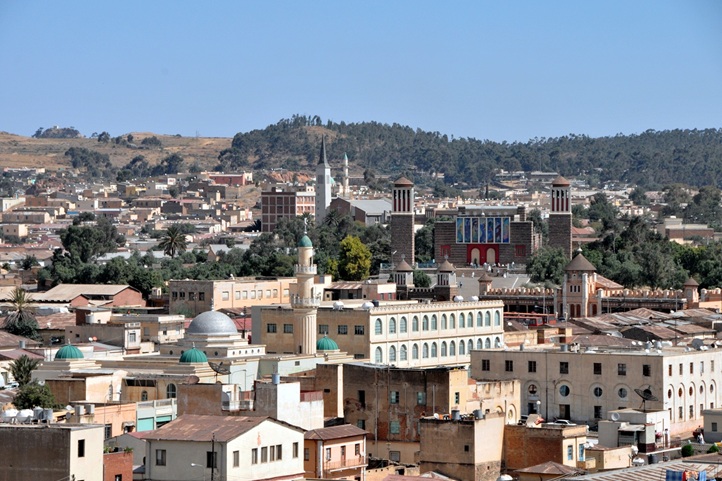
Shot from the top of the Cathedral’s bell tower (see below), a picturesque view across central Asmara, featuring the Al Khulafa Al Rashidin Mosque, Saint Mary’s Orthodox Church (Enda Mariam), and the surrounding hilltops.
Panoramic Asmara
Sweeping views across Asmara and its distinctive cityscape.


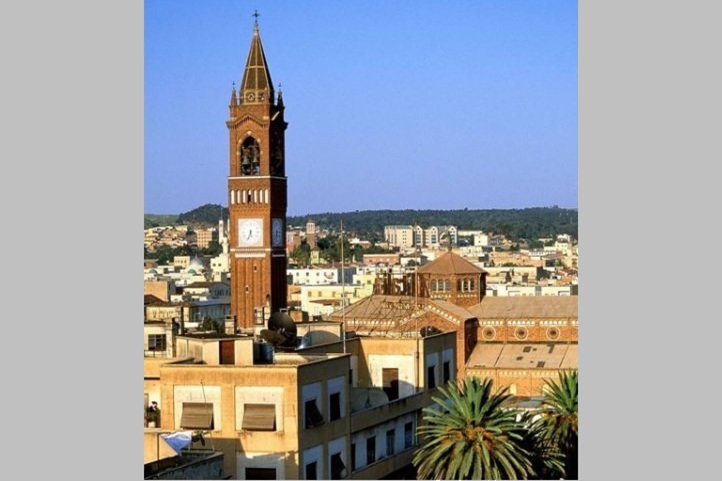
Dominating Asmara’s skyline is the bell tower of the Church of Our Lady of the Rosary — commonly referred to as La Cattedrale — surrounded by a blend of modernist and colonial architecture.
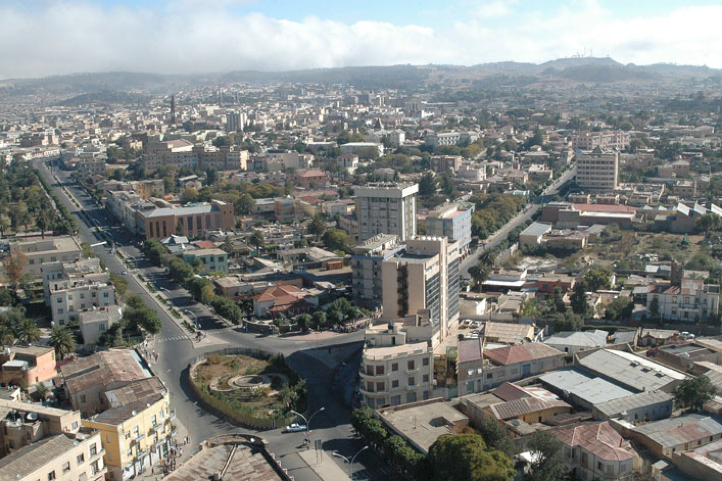
A panoramic view of central Asmara, facing northeast, with its intersecting roads and a modernist layout blending seamlessly with the surrounding hills and natural landscape.
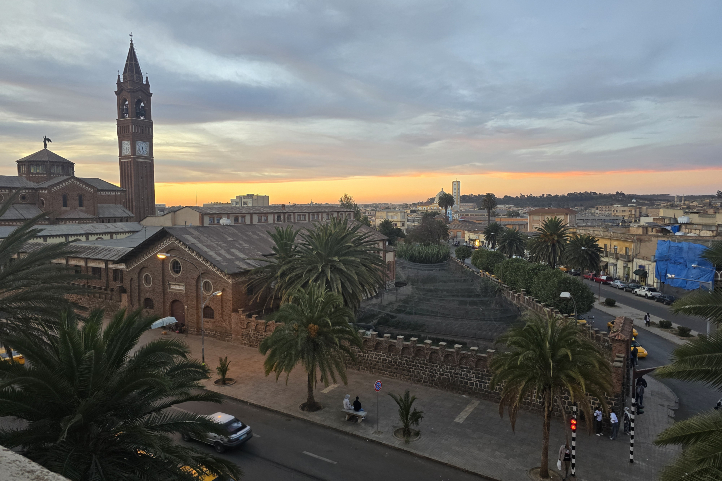
Overlooking Harnet Avenue, the clock tower of the Cathedral of Asmara rises at sunset; to the right, 176-17 Street intersects the avenue toward Nakfa Avenue.
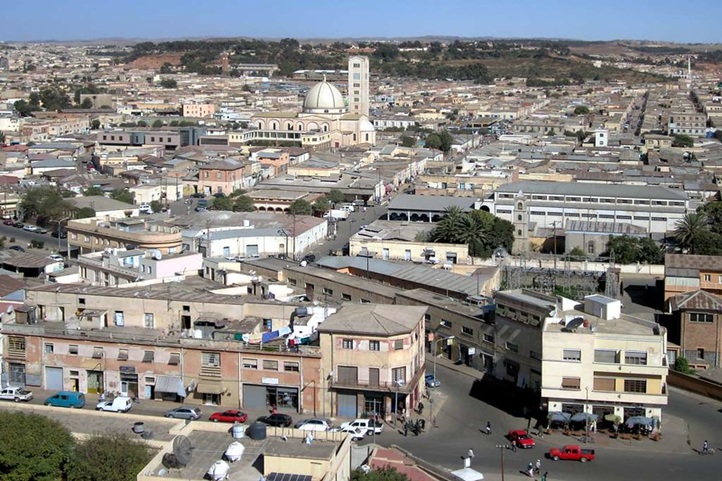
Asmara seen from above, looking north as 176–17 Street meets Nakfa Avenue, with Kidane Mihret’s dome in the distance and the central market nearby.
La Piccola Roma
Districts of Asmara by Location
Central District
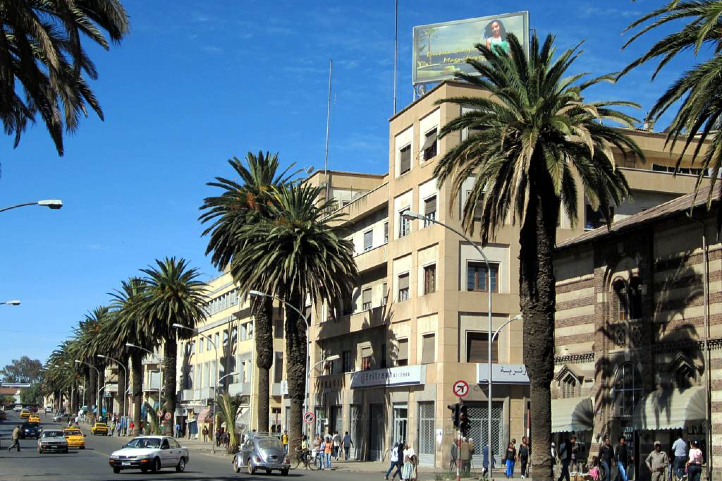
In central Asmara along Harnet Avenue, mid-century modern buildings with clean lines and balconies stand beside a row of tall palm trees. The palms frame the street, giving the avenue its distinctive character
Central District
Harnet Avenue, sunlight spills through the palm trees as the Cathedral drifts softly behind. Eastward, toward Bahti Meskerem, the city glows in quiet rhythm — warm, timeless, and full of gentle light.
Central District
Overlooking the High Court (left) on Harnet Avenue, with traffic flowing on a typical day. The Commercial Bank of Eritrea lies further up on the left, just out of view, and in the distance the road leads to Bahti Meskerem (see next photo).
Central District
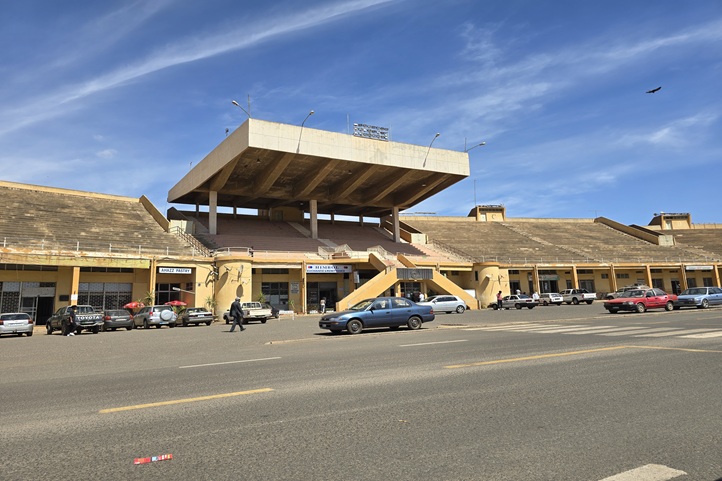
Bahti Meskerem (September 1) Square, located along Harnet Avenue in eastern central Asmara, commemorates the start of the Eritrean War of Independence, which is observed annually as a national public holiday.
Central District
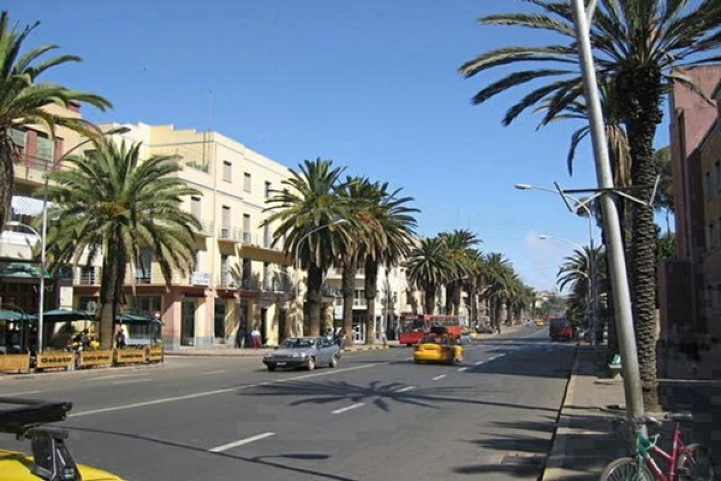
Palm tree-lined Harnet Avenue (Liberation Avenue), colloquially still known as “Comishtato” — a Tigrinya adaptation of the Italian Campo Cintato, meaning “fenced camp” — established during the Italian colonial era
Central District
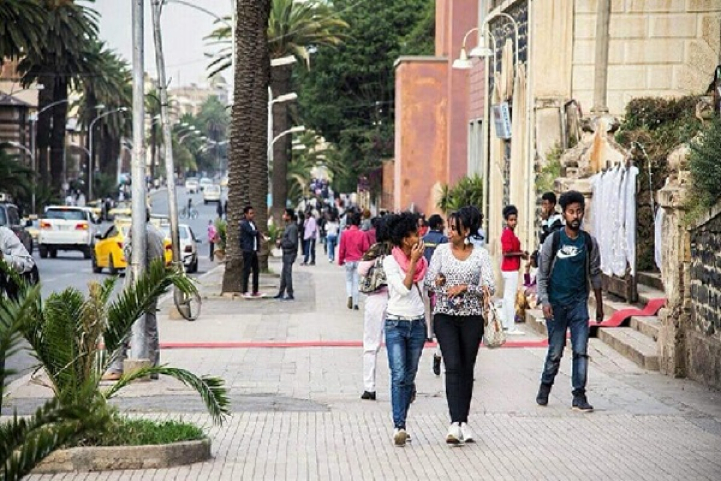
Though decades have passed, Asmara’s beauty and charm endure. A new generation of young Eritreans continues the timeless ritual of the leisurely stroll (Tigrinya: Zuret; Italian: Passegiata) along Harnet Avenue.
Central District
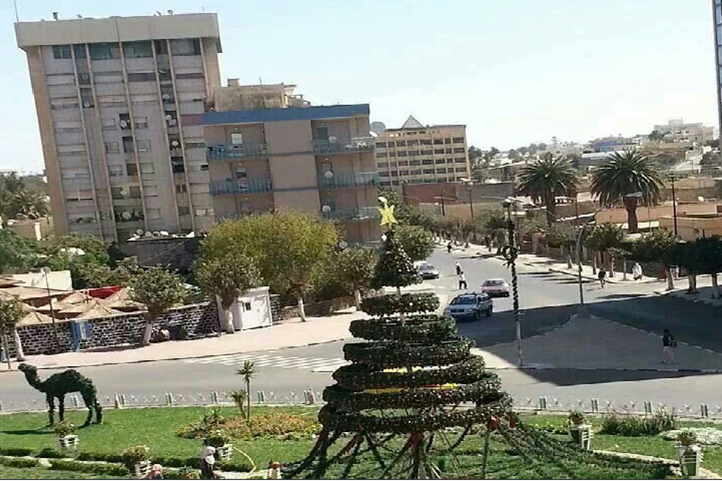
A view of Bdho Avenue from Shida Square — a busy roundabout once named Queen Elizabeth II Square during Haile Selassie’s reign — where palm trees and modernist buildings line the street.
Central District
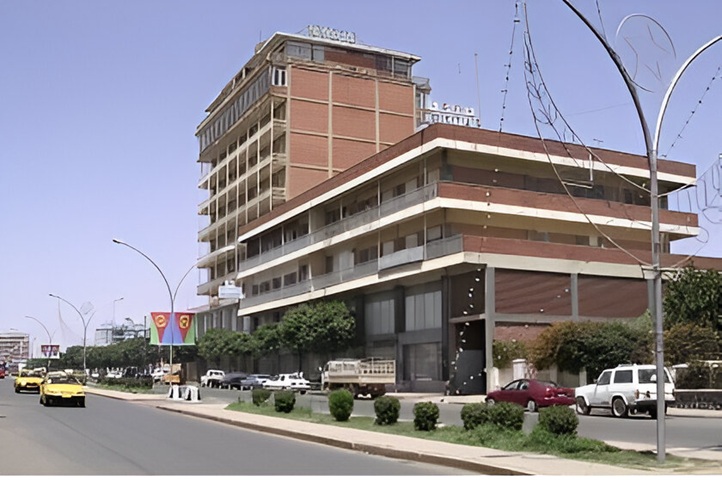
Nyala Hotel, on Sematat Avenue near Shida Square, built in 1969, is among Asmara’s earliest high-rise buildings, offering panoramic views across the city and its surrounding landscape.
Akriya District (North)
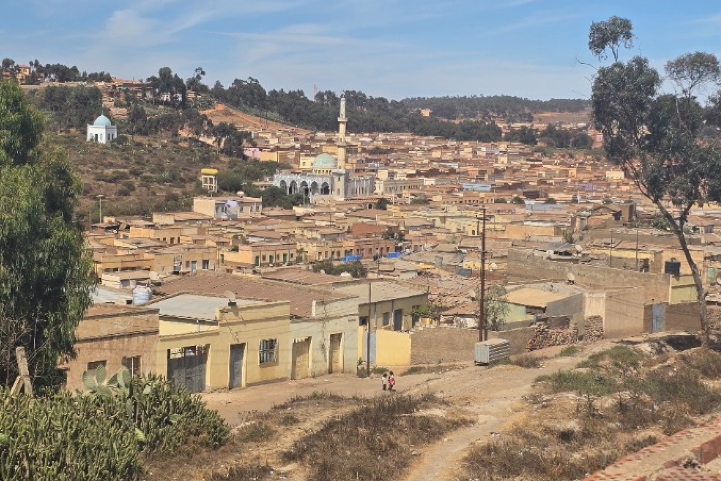
View of Akriya in northern Asmara from Cherhi (see next photo). Originally a distinct village surrounded by red-tinted mountains, it was built from boulders and stone before later incorporating brick.
Cherhi (North)
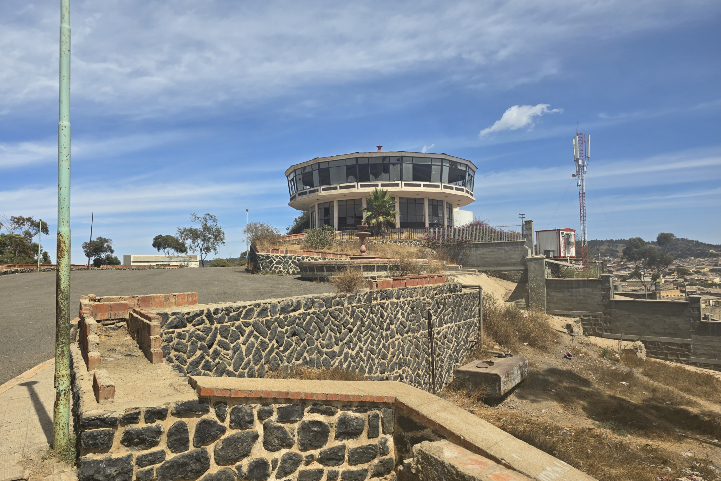
Located in northern Asmara, Cherhi is a popular hilltop destination known for its circular structure — resembling an air traffic control tower — and its sweeping panoramic views across the city.
Edaga Arbi (North)
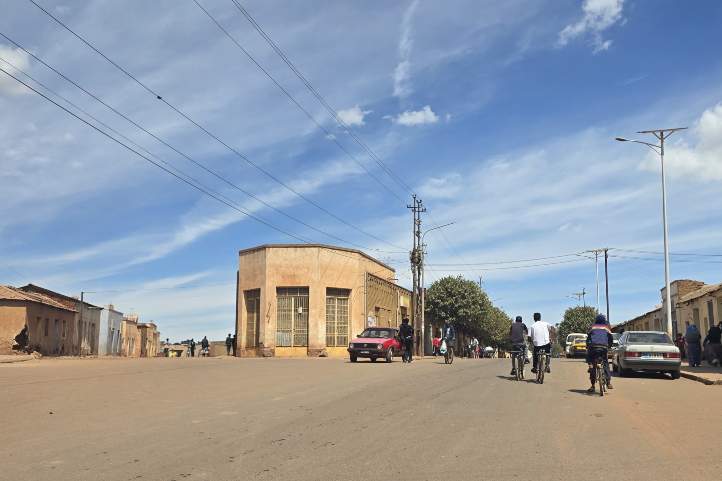
Edaga Arbi (Friday Market), part of the Akriya district, is one of Asmara’s oldest neighbourhoods and home to the historic weekly market from which it takes its Tigrinya name.
Aba Shawl District (North)
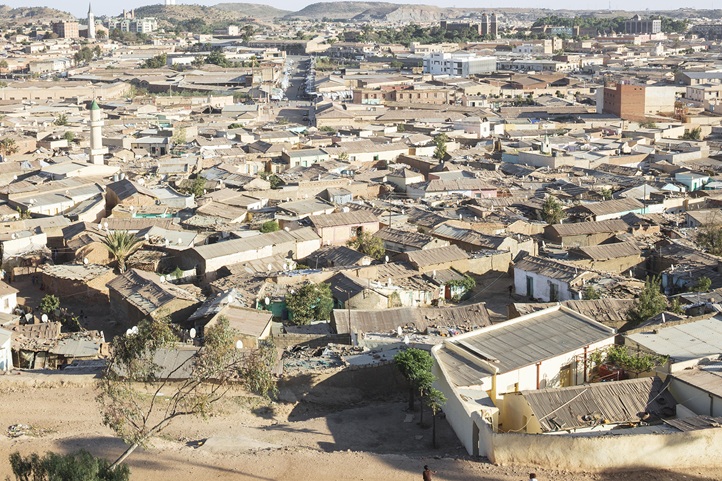
Aba Shawl, an old indigenous neighbourhood, is a maze of clustered homes and winding alleys. Central to Asmara’s history, it was shaped by relocation and segregation during the colonial era.
Edag Hamus District (North)
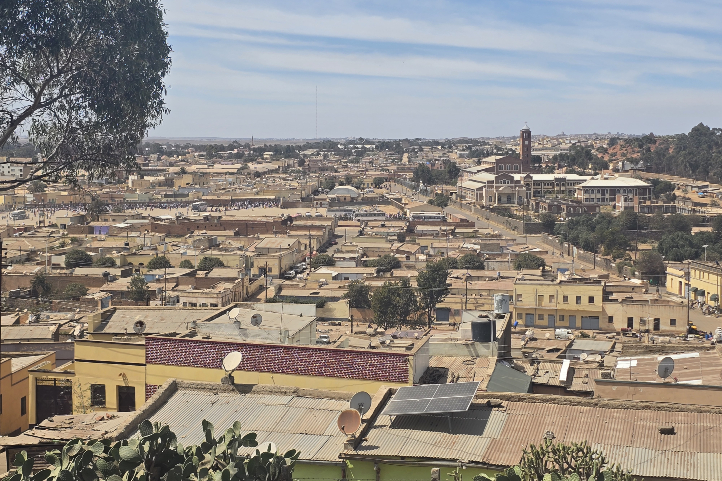
Edaga Hamus (Thursday Market), in northern Asmara, takes its Tigrinya name from the bustling weekly market held there and is especially known for its livestock trade. The Enda Mariam Church is visible in the background.
Arbate Asmera District (North East)
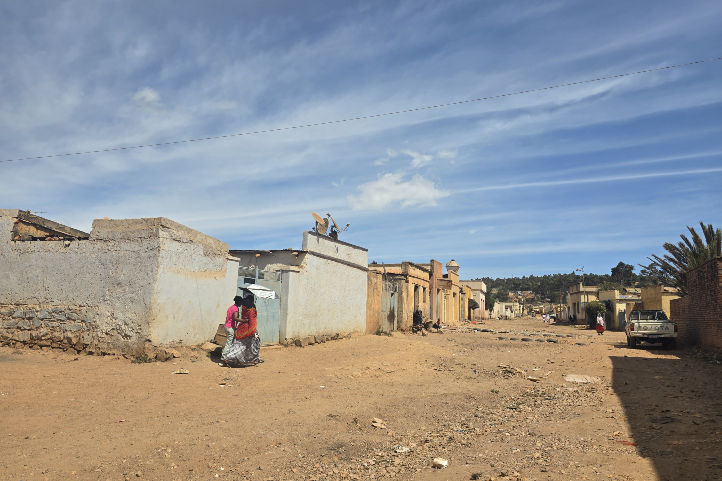
Asmara takes its name from the historic indigenous village of Arba’te Asméra, a district in the north east of the city. In Tigrinya, Arbate Asméra (‘Four Asmara’) refers to the unification of four villages on the Hamassien plateau before Italian colonisation.
Gheza Kenisha (North East)

View from the Cherhi hilltop of Gheza Kenisha, a sub-district of Arba’ete Asméra and one of the historically rooted neighborhoods associated with the earliest development of Asmara, emerging from the original Arba’ete Asmera settlement area, with its clustered hillside homes visible along the slopes below.
Gheza Tanika (North East)
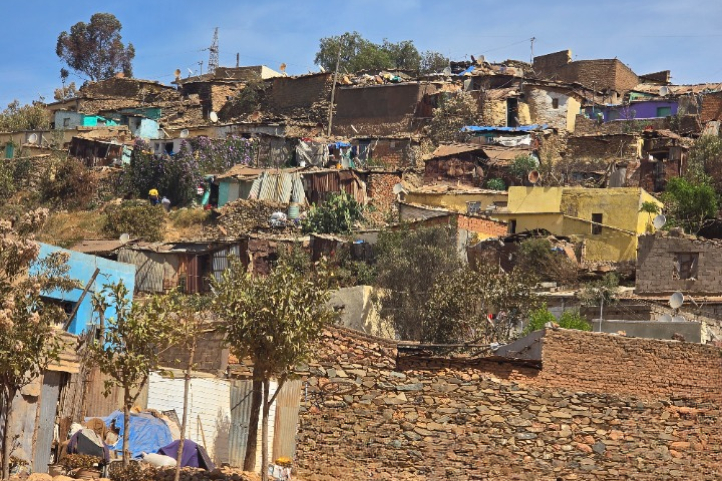
Gheza Tanika, a sub-district of Arba’ete Asméra on the northeastern outskirts of Asmara, where modest hillside homes with distinctive metal rooftops cluster together; the name Tankia reflects the “neighbourhood (or homes) of tins”, referring to these corrugated metal dwellings.
Bet Gherogis (North East)
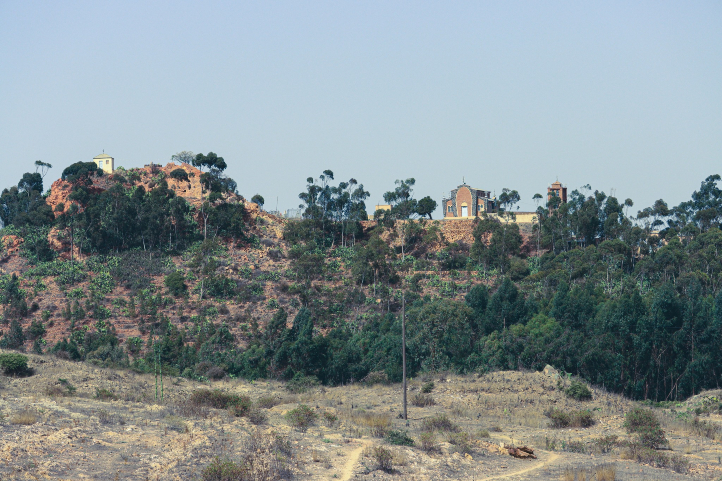
Located in northeast Asmara and part of the Arb’ate Asméra district, Bet Gherogis lies along the road to Massawa and is best known for St George’s Church, which stands atop a rocky hill offering a striking vista across the surrounding landscape.
MaitTemenai District (North West)
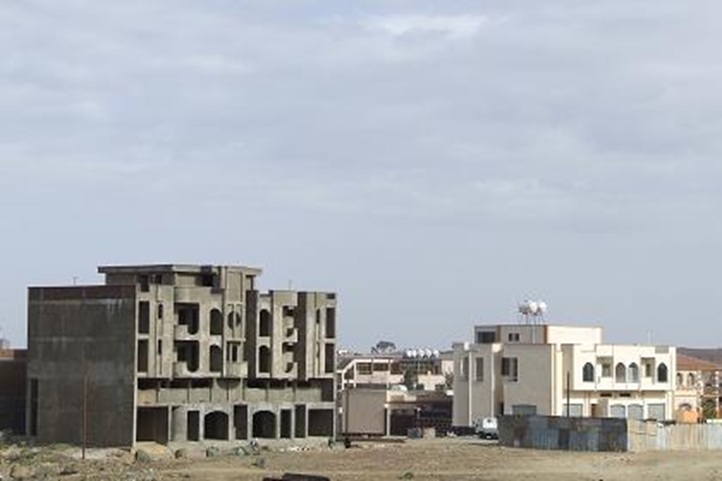
Mai Temenai, in the northwestern part of Asmara, extends toward Paradiso and on to the nearby villages of Adi Segdo and Adi Abeito. It has seen steady growth over the years, with increased housing construction and the expansion of other services.
Paradiso District (North West)
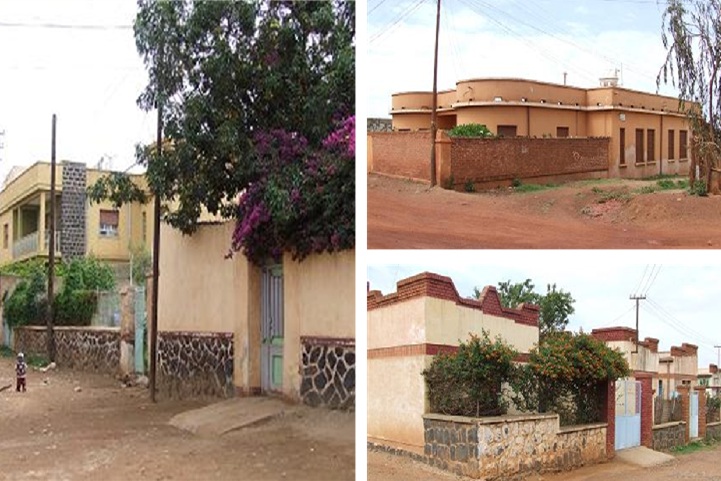
Paradiso (aka Villaggio Paradiso), in northwest Asmara, is home to historic colonial-era fortresses named after Italian generals Baldissera and Galliano, as well as elegant villas that reflect the city’s rich architectural heritage.
Sembel Distict (South West)
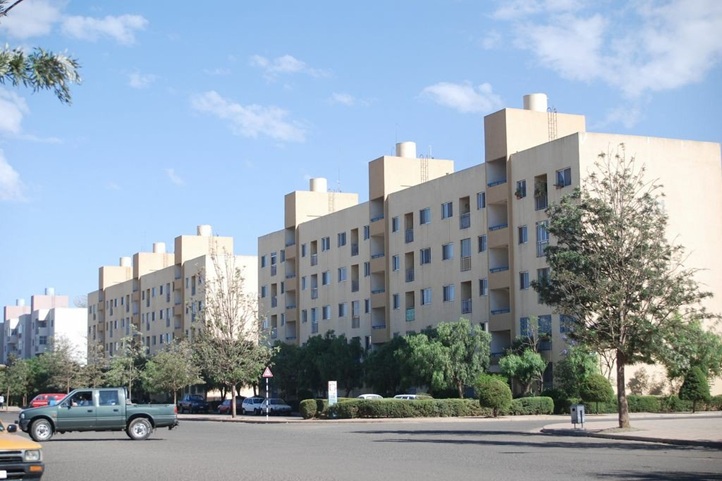
This Sembel housing complex, southwest of Tiravolo (from the Italian tiro a volo), was developed in 1996 to meet the growing demand for housing in Asmara and to allow returning diaspora to resettle or establish a second home.
Godaif District (South East)
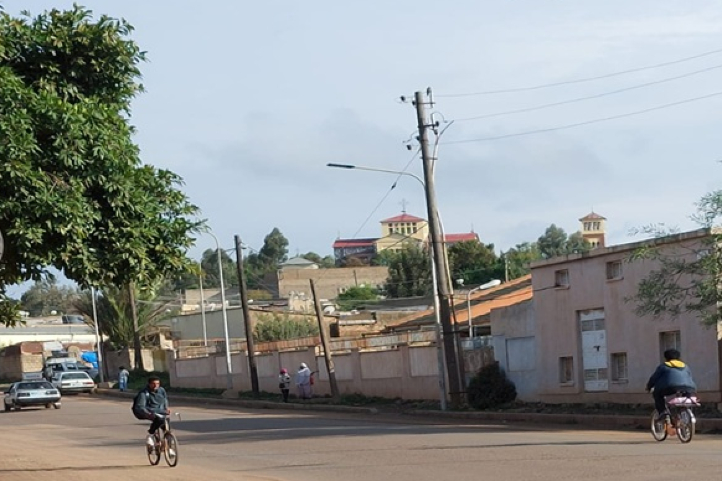
Godaif, an established district in the southeast near the city’s edge, has expanded since independence with new housing and growing commercial activity. It serves as a gateway or road checkpoint (aka blocco) on the Asmara–Dekemhare route.
Tiravolo District (West)
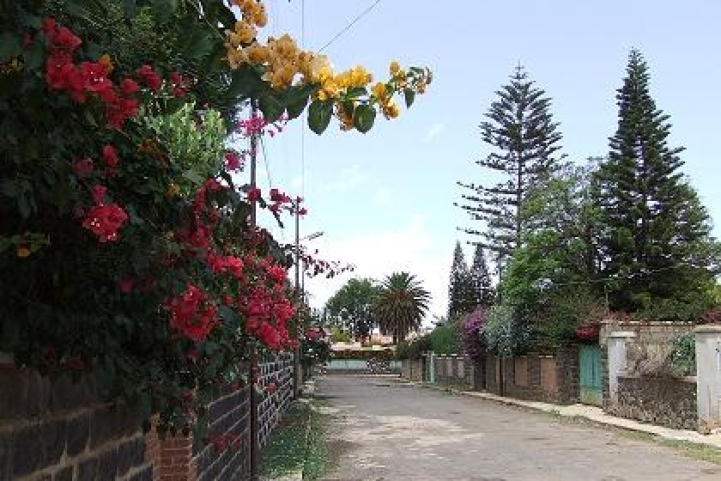
Tiravolo, a western district of Asmara, combines bougainvillea-lined streets with elegant Italian-era villas. The name is a Tigrinya adaptation of the Italian tiro a volo — “shooting in flight” — referring to pigeon shooting once held there. Watch on YouTube.
Gejeret District (West)
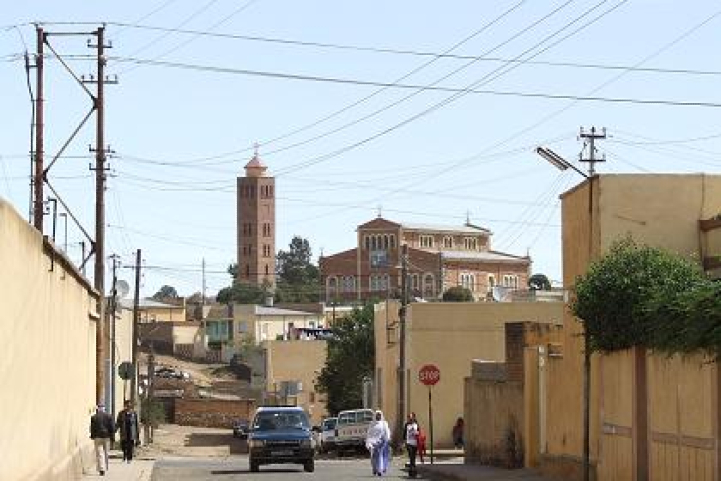
Gejeret, west of Asmara, known for its mix of older homes and newer developments reflecting the city’s diverse character, is a long-established community where people have lived and built their lives for generations.
Gheza Banda District (East)
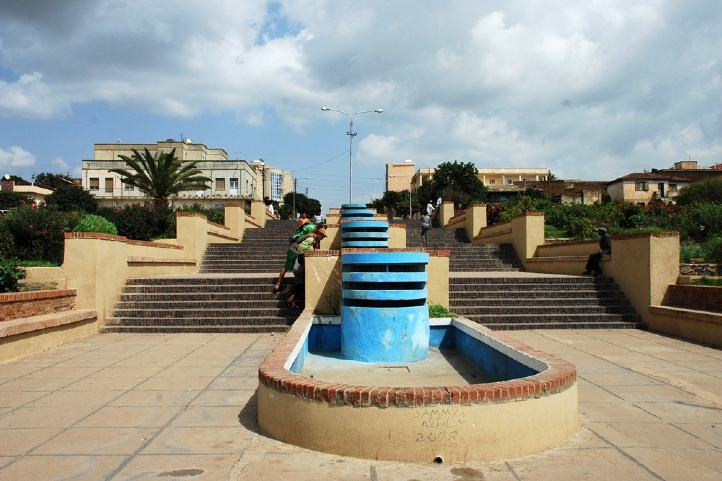
The steps of Mai Jah Jah Fountain rise toward Gheza Banda, one of Asmara’s oldest quarters, whose name derives from the Italian Casa Banda (“House of the Band”), referring to the Askari colonial troops once stationed there.
A New Asmara
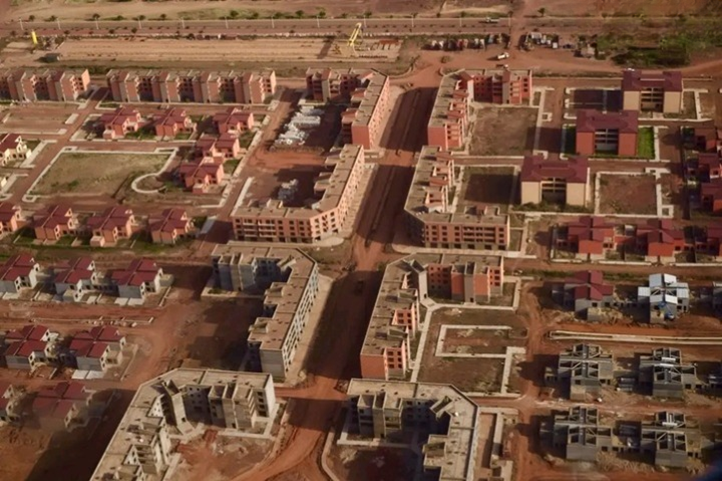
An aerial view of the new Sembel development, part of the wider Asmara Housing Project spanning Sembel, Space and Halibet, bringing large-scale modern housing to the expanding city.
Landmarks
The view of Asmara from the hilltop of Forte Baldissera extends from south to north. The fort, named after General Antonio Baldissera, was built by Italian forces following their occupation of Asmara on 3 August 1889.
To browse the gallery belfow use the left and right arrows, or swipe on mobile, to explore the gallery.


Asmara–Massawa Railway
Completed in 1911, the remarkable Asmara–Massawa railway descends from the highlands of Asmara towards the Red Sea coast, winding through spectacular mountainous terrain and the towns and villages of Nefasit, Embatkala, Ghinda and beyond. Its steep curves, tunnels and bridges made the journey one of Eritrea’s great railway experiences. The videos below capture historic steam locomotives and Littorina railcars travelling along this extraordinary route — a memorable experience for railway enthusiasts.
Massawa (ባጽዕ)
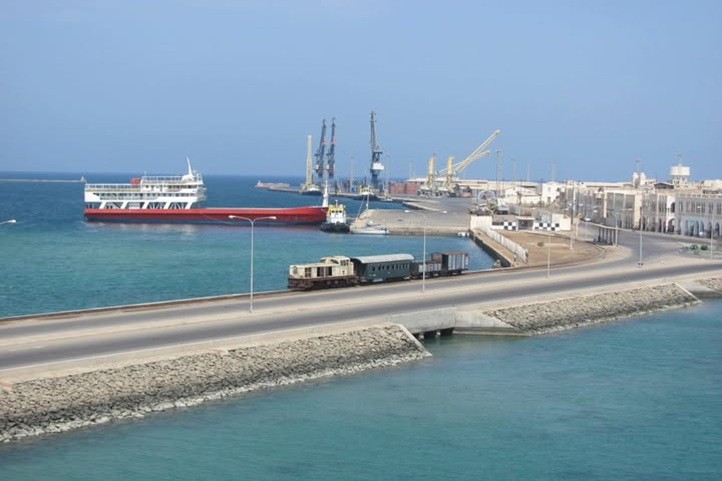
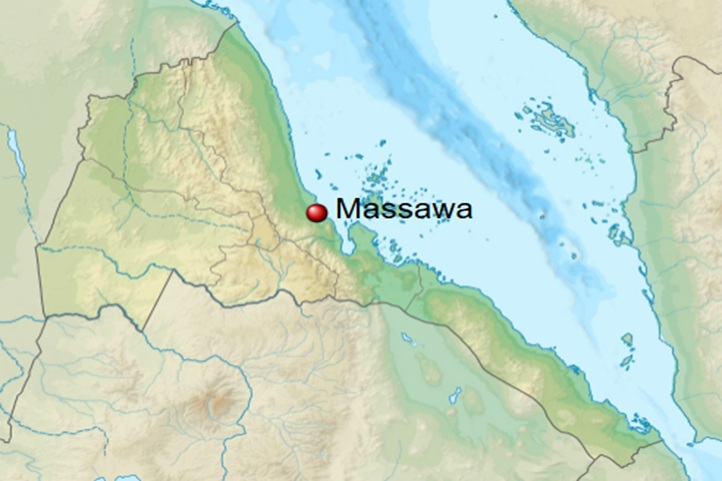
Massawa (Batsiʿ in Tigrinia), on Eritrea’s Red Sea coast some 115 km from Asmara, has for centuries been the country’s principal gateway to the sea. Its long history as a centre of trade and maritime exchange has left a distinctive cultural and architectural legacy, shaped particularly by Ottoman, Egyptian and Italian influences.