Share your comments, thoughts, memories (if any) or perspectives on Asmara’s buildings — from Art Deco elegance to Modernist innovation — that earned the city its UNESCO World Heritage status.
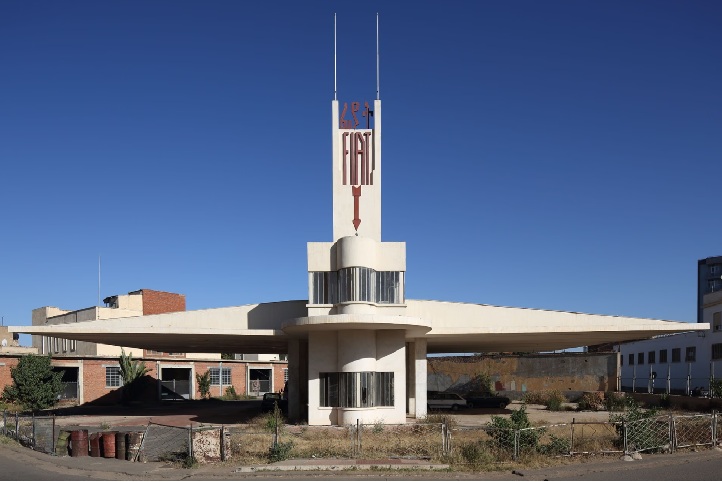
FIAT Tagliero, Senafe Street
Built in 1938 by Italian engineer Giuseppe Pettazzi, this iconic Modernist structure on Senafe Street — a service station designed to resemble a futuristic aircraft with wings extending 15 metres — exemplifies Futurist and Rationalist influences. The Fiat Tagliero Building survived British bombing during WWII with minimal damage.
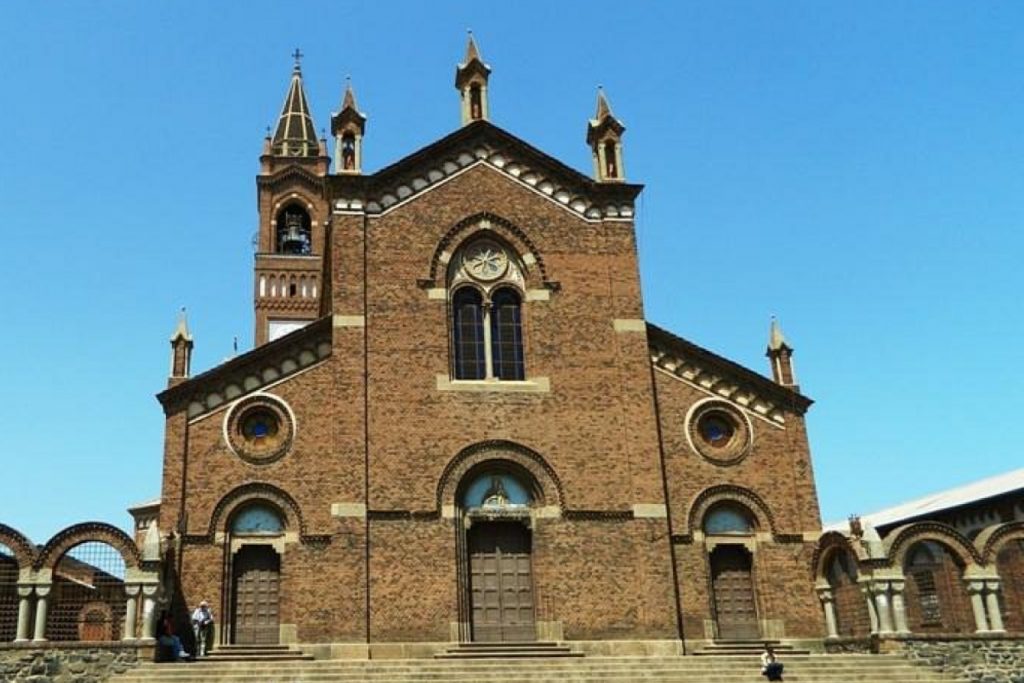
La Cattedrale, Harnet Avenue
Built in 1922 by Italian architect Oreste Scanavini, this Lombard Romanesque Revival church was constructed for the Italian Catholic community in colonial Eritrea. Featuring red brick, arched windows, and a tall bell tower, it was never the seat of a diocesan bishop and is not a cathedral in the strict ecclesiastical sense.
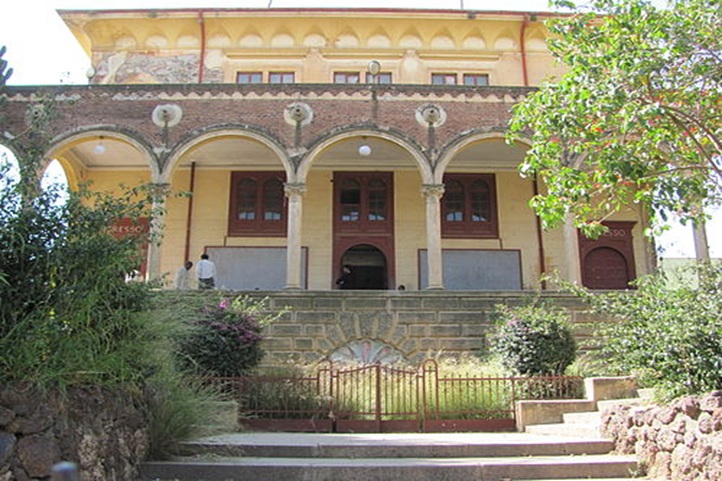
Asmara Theatre, Harnet Avenue
Built in 1918 by Odoardo Cavagnari, this Romanesque Revival and Neoclassical venue — originally Teatro di Asmara (now commonly known as Cinema Asmara) — hosted Italian theatre, opera, and cinema through the 1950s. From the 1960s, it screened Indian films and accommodated touring international and local performances.
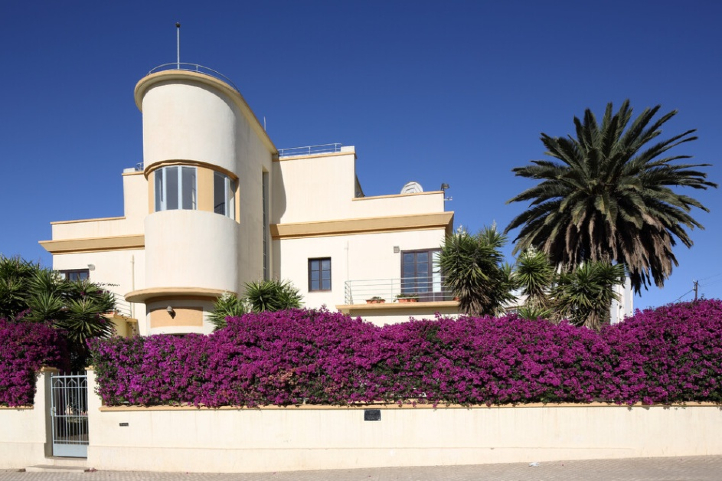
World Bank Headquarters
Built in 1938 on 173-5 Street, this late Art Deco villa with Rationalist influences features rounded corners and sleek modern lines. Originally constructed as a private residence, the building reflects the refined domestic architecture of the Italian colonial period.
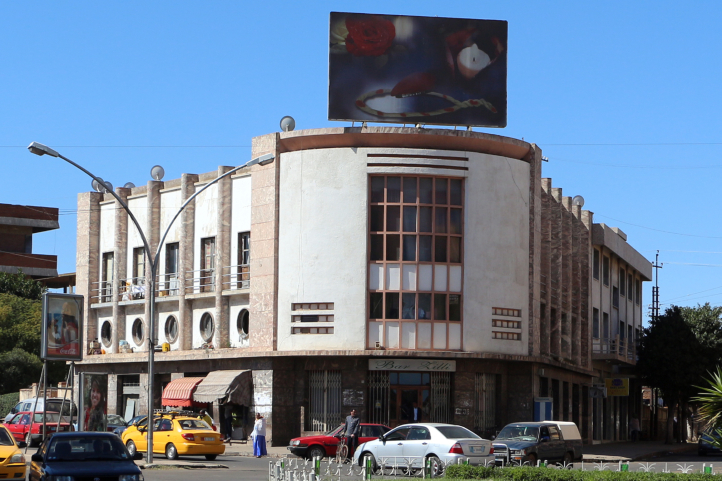
Bar Zilli, Shida Square
Built in the 1930s, Bar Zilli is a popular café bar designed in Art Deco and Rationalist style, resembling a 1930s radio. Its rounded façade, vertical windows, and porthole-style details make it one of Asmara’s most distinctive and recognisable buildings.
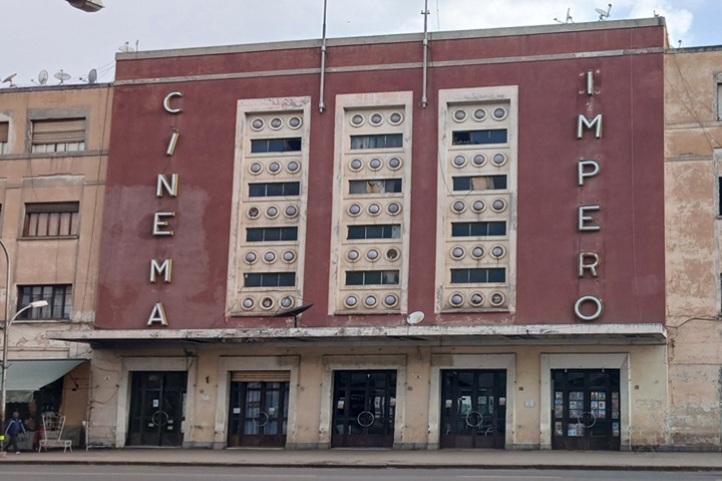
Cinema Impero, Harnet Avenue
Built in 1937 by Mario Messina, Cinema Impero is Asmara’s largest cinema and a prime example of Art Deco architecture. Named after Benito Mussolini’s invasion of Ethiopia, it features a symmetrical façade, geometric forms, vertical emphasis, and streamlined detailing.
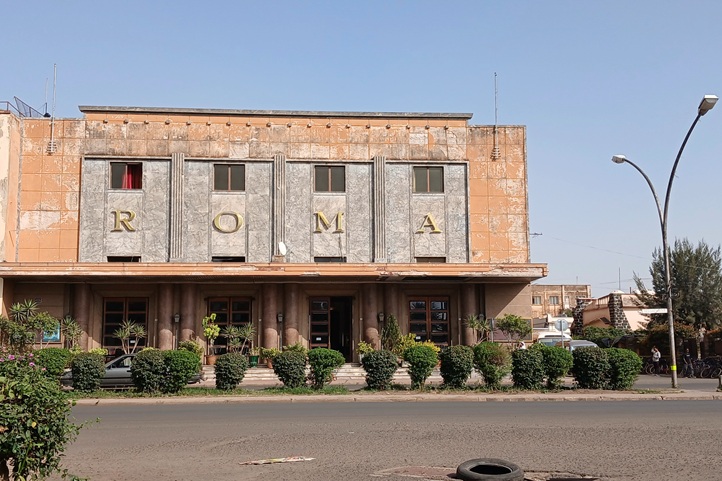
Cinema Roma, Sematat Avenue
Built in 1937 by Bruno Guiducci orginally as Cinema Excelsior, this Art Deco cinema was later renamed Cinema Roma and restored in 2005 to its 1940s appearance. It is well known for screening Hollywood films and remains an active part of the city’s cultural life.
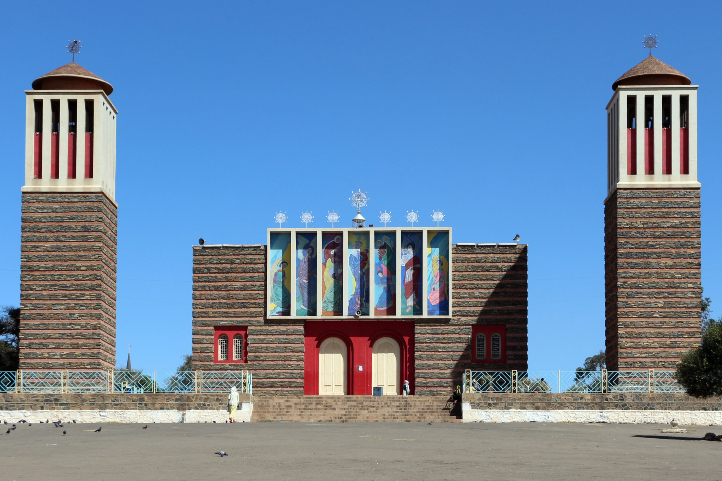
Enda Mariam, Arbate Asmera Street
Rebuilt in 1938 by Ernesto Gallo, this Orthodox church, commonly known as Enda Mariam, reflects an eclectic style with Italian colonial influences. Featuring twin towers and modern materials, it blends traditional ecclesiastical forms with elements of Italian architectural design.
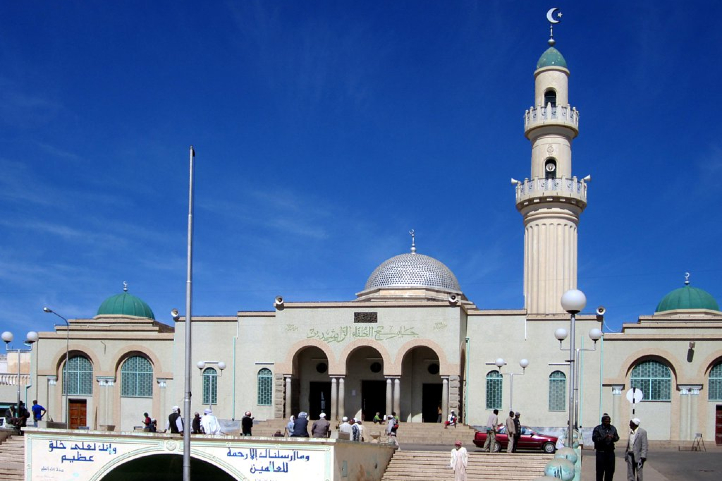
The Great Mosque, Selam Street
Built in 1938 by Guido Ferrazza, the mosque — formally known as Al Khulafa al-Rashidin — combines Rationalist planning with Classical and Islamic influences. Its design reflects a careful synthesis of modern architectural principles and religious tradition.
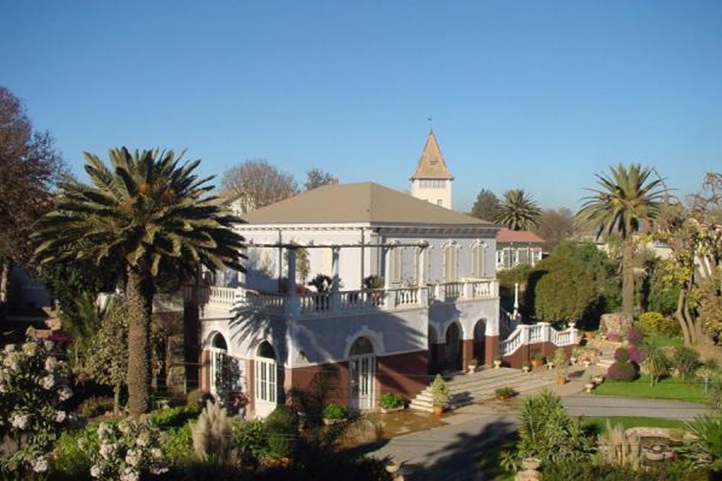
Villa Roma, Keskese Street
Built in the 1930s , this well-preserved villa blends Italian colonial architecture with Art Deco and Modernist influences. Now functioning as an embassy, it reflects the elegance and hybrid character of residential architecture from the late colonial period.

Africa Pension, Keskese Street
Built between the 1930s and 1940s, this former Italian-era villa — located opposite the Italian Embassy — has been converted into a guesthouse. It features Modernist geometric forms, clean lines, and a minimalist façade characteristic of Rationalist design.
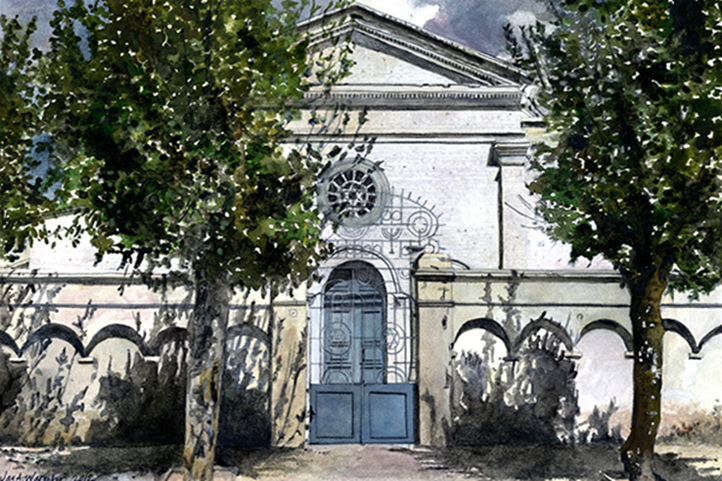
Asmara Synagogue, Senafe Street
Built in 1906, this synagogue reflects Italian colonial architecture with classical influences. Its balanced design includes a triangular front, flat columns, tiled exterior, and a blusih stained-glass Star of David.
Albergo Italia (Keren Hotel), Nakfa Ave.
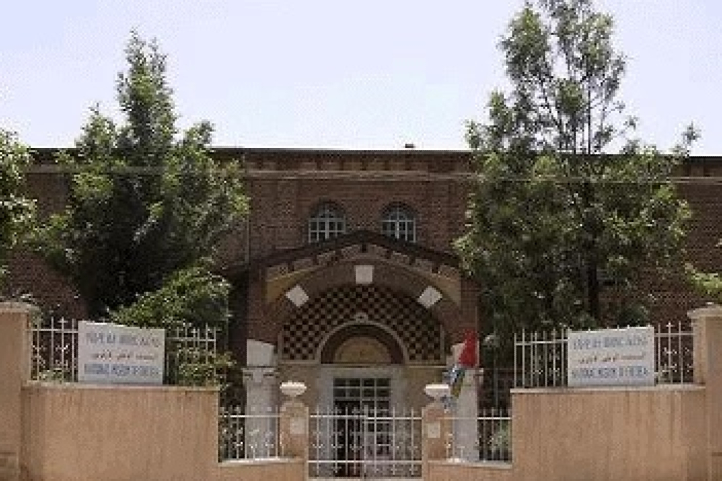
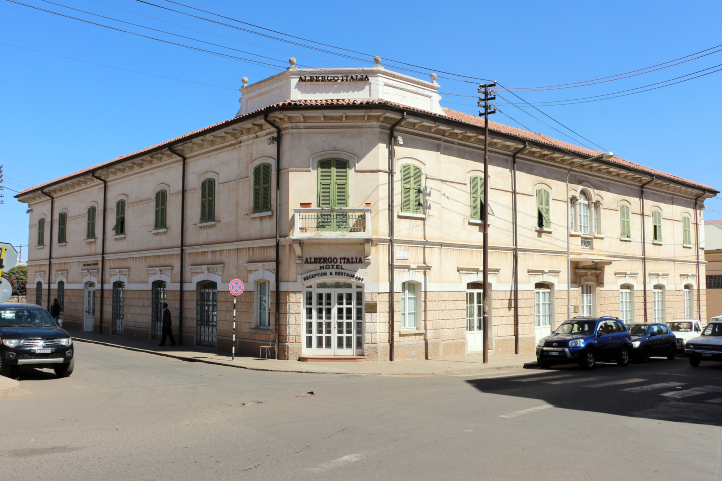
Built in 1899, Asmara’s oldest hotel was restored in 2004 and reflects early Italian colonial architecture. Its design incorporates Neoclassical and Rationalist influences, marking it as a key landmark in the city’s architectural history.

Casa degli Italiani, 175-15 Street
Built in the 1920s, this Italian colonial building originally served as a social club for the Italian community. Featuring a brick façade and arched openings, it now functions as a restaurant while retaining its historical character.
Palazzo Amoroso (Verde), Harnet Avenue
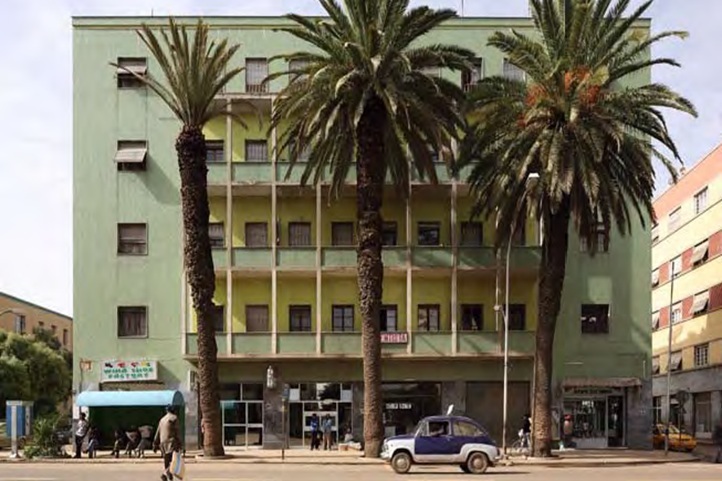
Built in 1956, Palazzo Amoroso, also known as Palazzo Verde, is a Modernist building designed by Arturo Mezzedimi from an earlier 1941 project by Giuseppe Malaguti. Its geometric façade features balconies and locally produced tiles in two shades of green
Palazzo Aba-Habesh, Harnet Avenue
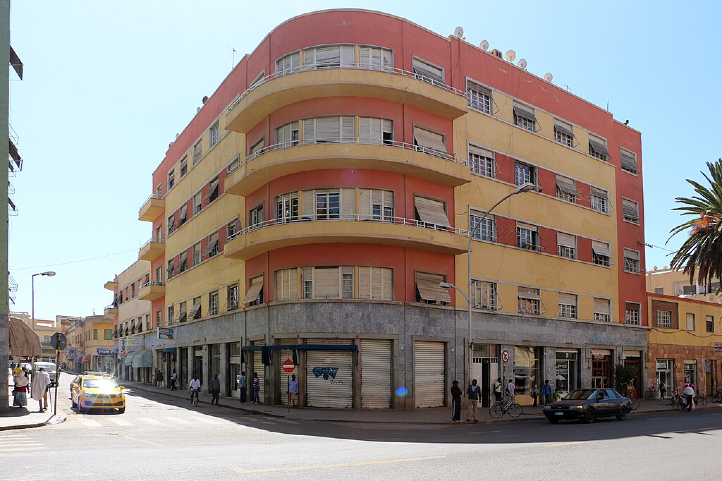
Built between the 1930s and 1940s , this round building, opposite Cinema Impero, combines Art Deco and Streamline Moderne influences. Its curved façade, horizontal balconies, and clean lines exemplify late colonial architectural trends.
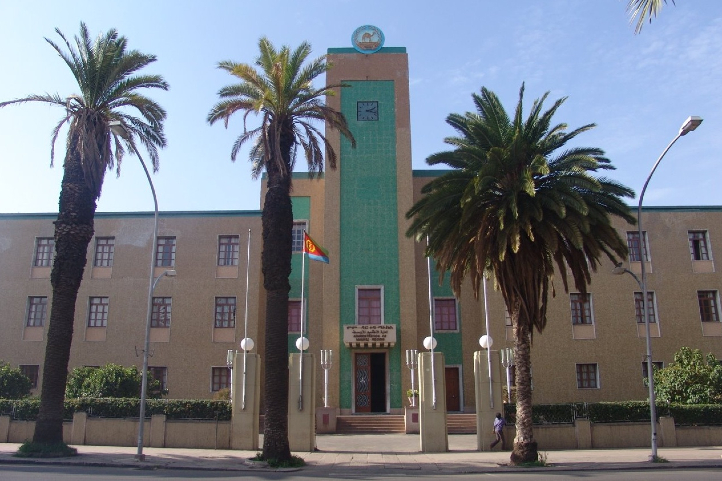
Governor’s Palace, Harnet Avenue
Built in the 1930s, this city hall — also known as Asmara Municipality ( or Il Municipio) — is designed in the Fascist Littorio style. Its central tower and monumental forms reflect the authority and symbolism of Fascist-era architecture.
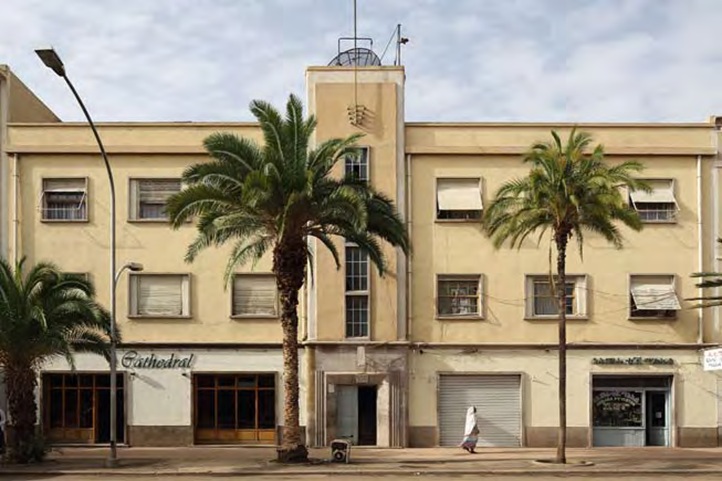
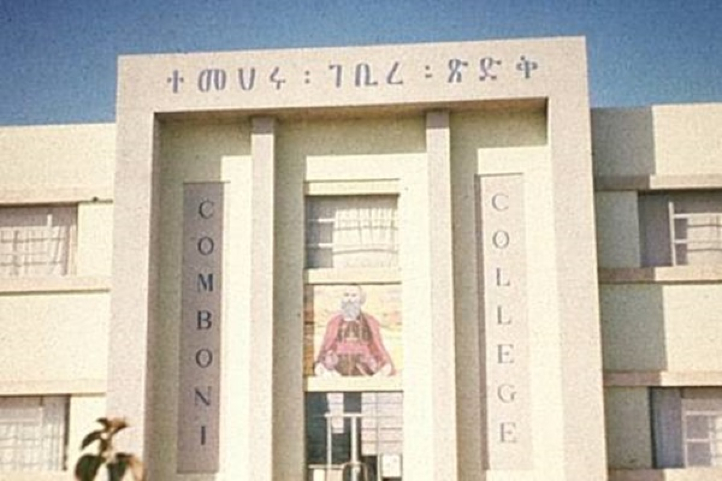
Comboni College, Knowledge Street
Built in 1947 by the Comboni Missionaries this popular school — now Barka Secondary School — features a geometric façade and vertical recesses. Its design reflects late Art Deco with early International Style influences.
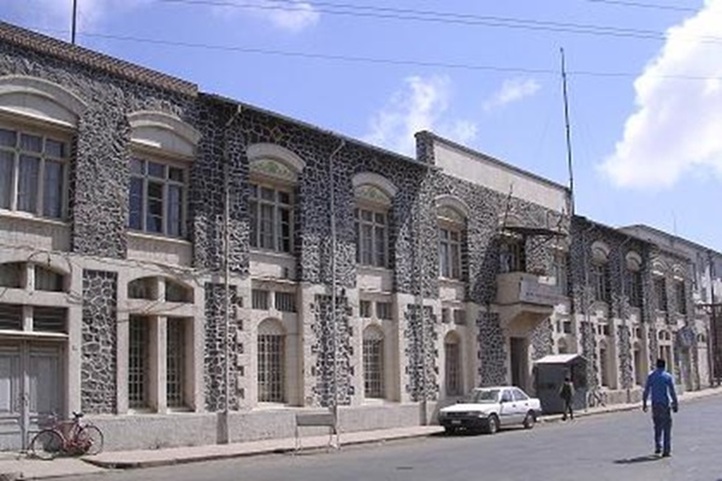
Ministry of Finance, Bihat Street
Built in the 1930s, this government office originally housed finance and customs departments (Ufficio delle Finanze e delle Dogane). It exemplifies late Fascist-era Rationalist architecture through its austere form and symmetrical design.
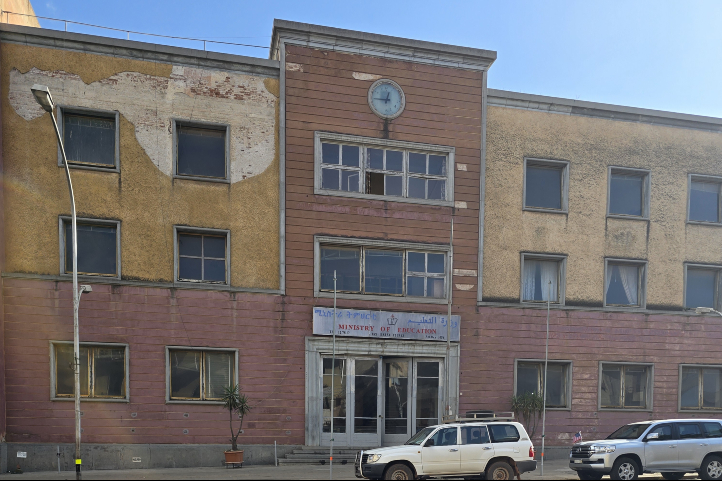
Ministry of Education, Harnet Avenue
Built in the 1930s as the Casa del Fascio, this building now houses the Ministry of Education. Its monumental symmetry and stark geometry are characteristic of Italian Rationalist architecture of the Fascist period.
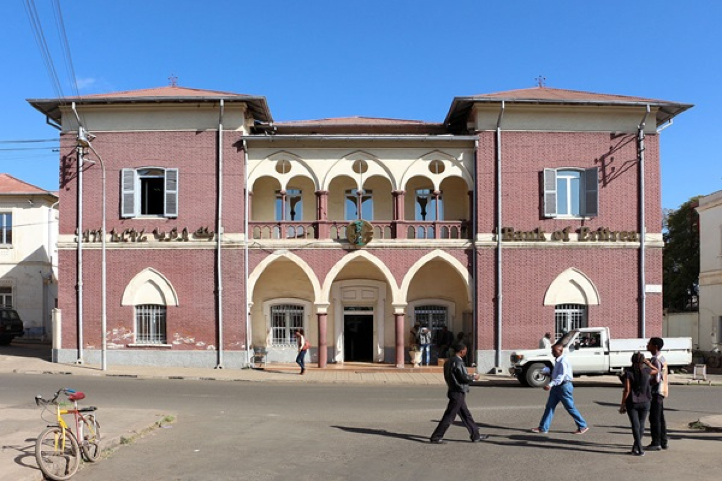
Bank of Eritrea, Nakfa Avenue
Built in 1914 as the Banca d’Italia, this building reflects an eclectic style with Neo-Renaissance influences. It combines symmetry with Moorish arches and Venetian loggias, illustrating early Italian colonial architectural experimentation.
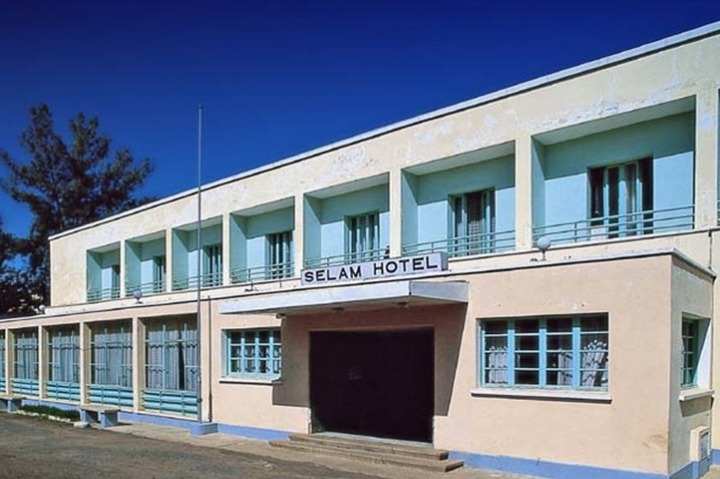
Selam Hotel, Maryam Ghimbi Street
Built in 1937 as Albergo C.I.A.A.O, this hotel reflects Rationalist architectural principles. Its flat roof, clean geometry, and deep-set windows emphasise functionality and the design ethos of the Fascist period.
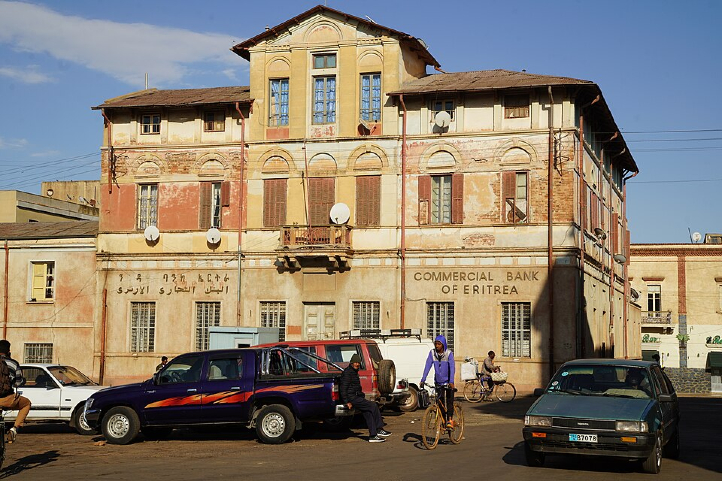
Commercial Bank of Eritrea, Nakfa Ave
Built in 1914 on Nakfa Avenue as Banco di Roma, this early financial institution features Neoclassical symmetry with eclectic detailing. It represents one of the earliest examples of Italian colonial banking architecture in Eritrea.
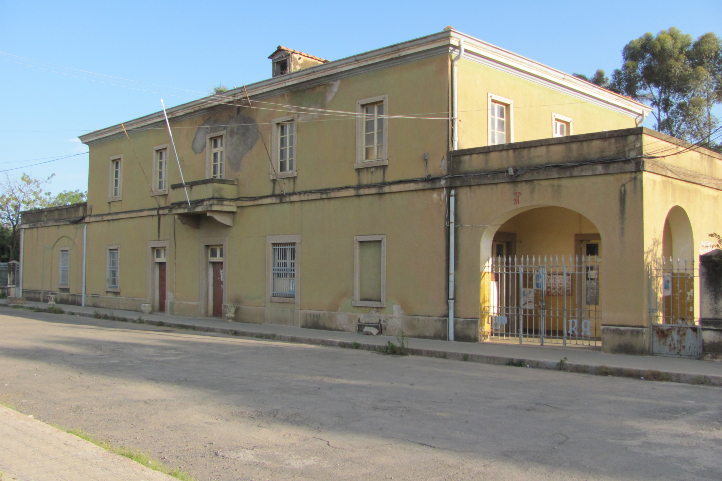
Asmara Railway Station, Bihat Street
Built in 1911, this railway station served the Asmara–Massawa line linking the highlands to the Red Sea. Its design combines Neoclassical symmetry with industrial simplicity typical of early colonial infrastructure.
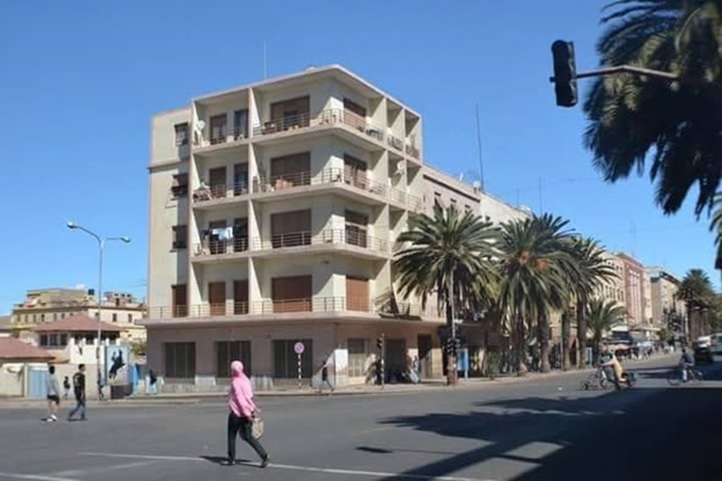
Pallazo Mazzetti, Harnet Avenue
Built in 1939 and designed by Roberto Cappellano, Palazzo Mazzetti is a striking Rationalist building distinguished by its projecting concrete frame and wrap-around corner balconies. Its ground floor later housed the DARMAR shoe store.
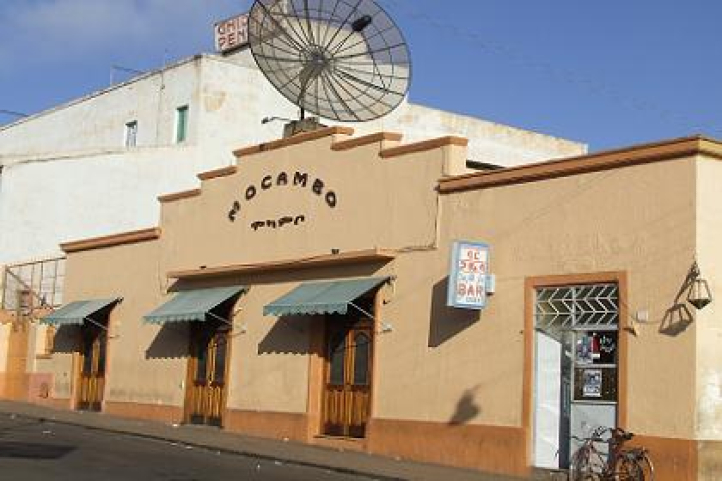
Mocambo, Adi Hawesha Street
Built in the 1930s as a chick Italian restaurant, the building later became a vibrant local nightclub. Its clean geometry and restrained detailing reflect late colonial vernacular architecture with subtle Rationalist influence.
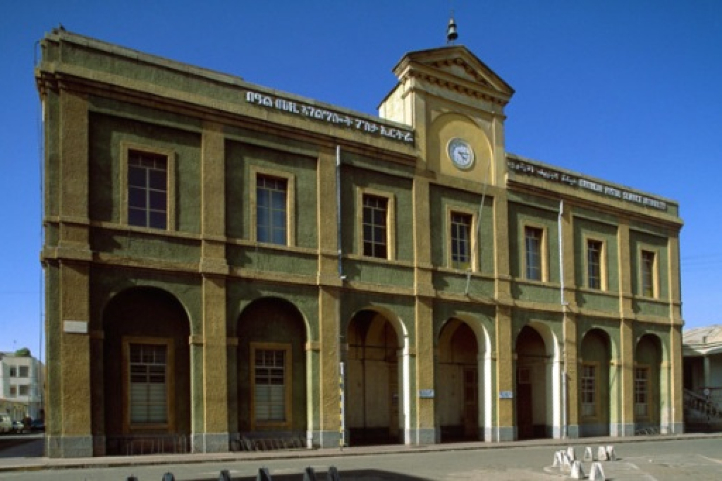
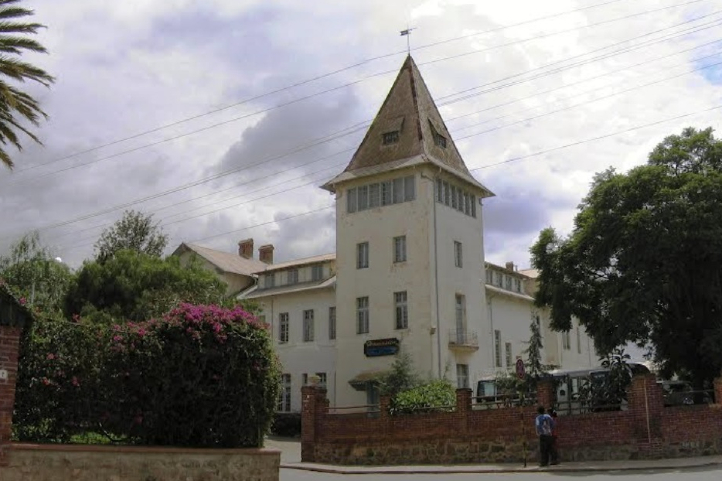
Hamasien Hotel, Beleza Street
Built in 1919 on as the Royal Hotel, this building reflects Italian colonial architecture with Alpine influences. Its stonework, wooden balconies, and tower-like corner with a steep roof evoke European mountain styles.
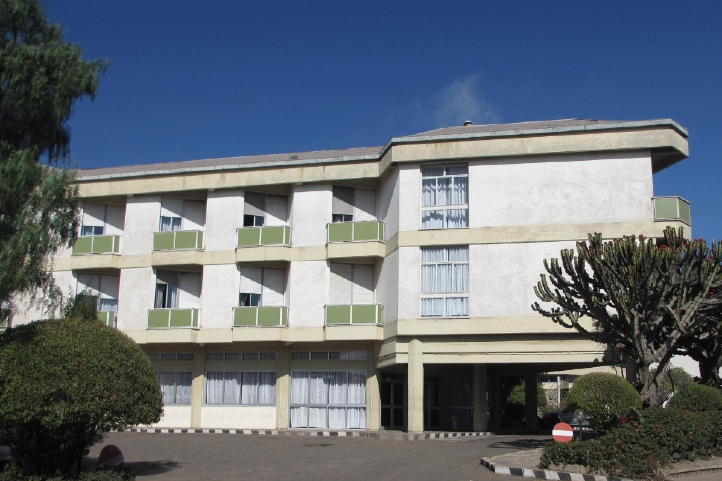

Cinema Odeon, Bihat Street
Built in 193 , this cinema blends Art Deco and Rationalist design. It features tall vertical windows, geometric symmetry, and a modernist interior reflecting architectural innovation of the period.
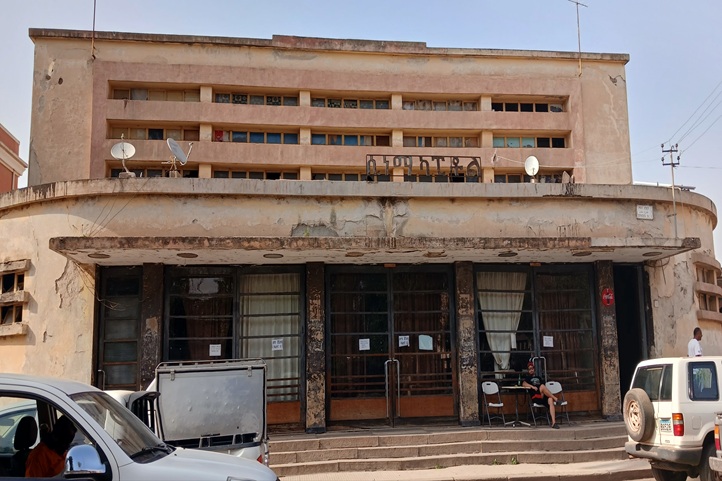
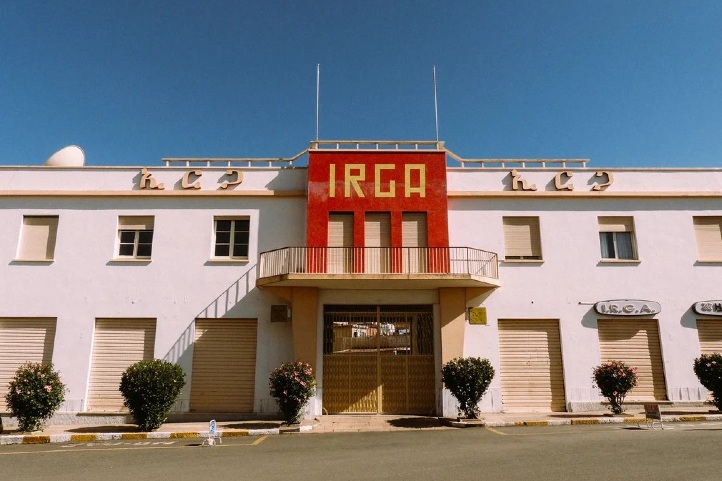
IRGA Building, near Fiat Tagliero
Built in 1961 by Carlo Mazzetti, this garage (Industria Riparazioni Gomme Asmara) exemplifies post-colonial Italian Modernist architecture, reflecting the continuation of Rationalist design after Italian rule, with utilitarian and late Modernist character.
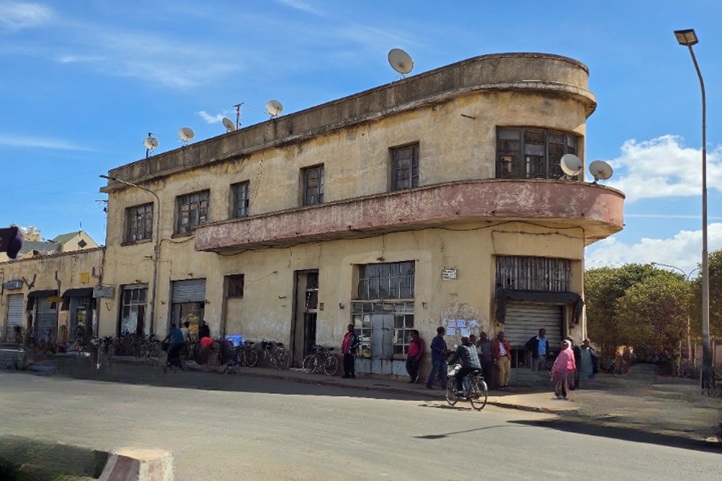
Locomotive Building, Debre Bizen St.
Designed by Aldo Fornarini and completed in 1939, this locomoitve shaped building features a façade with a stylised diesel locomotive relief. It combines Rationalist form with subtle Art Deco influences in an industrial context.
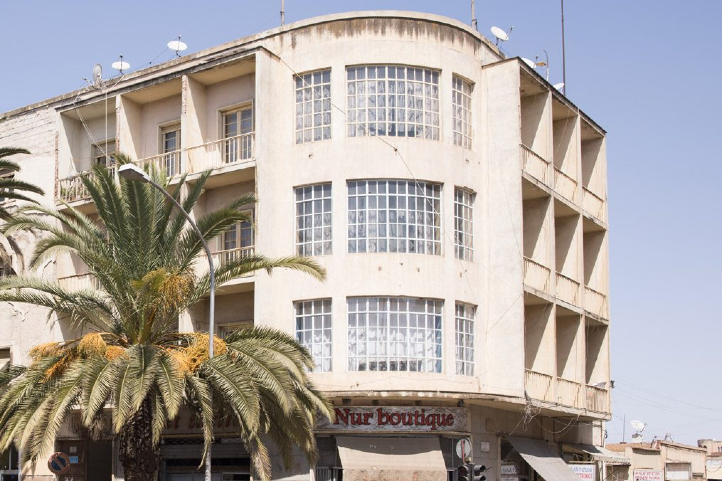
Former Banca d’Italia, Harnet Avenue
Built in the 1930s, this Rationalist building originally housed the Banca d’Italia and later Ethiopian Airlines offices. Its austere symmetry and clean lines reflect the clarity of Rationalist design.

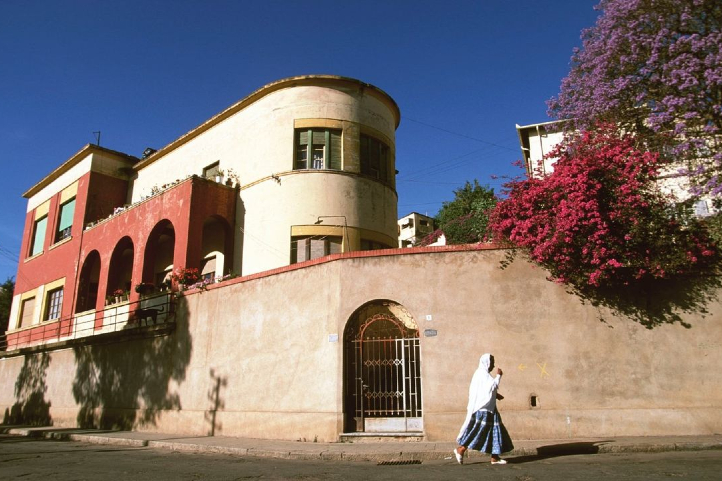
Villa Grazia
Built in 1942 by Antonio Vitaliti on former Via Pennazzi, this Art Deco residence is distinguished by its rounded bow and deck-style railing. Its smooth lines and nautical detailing reflect refined domestic architecture of the late colonial period.
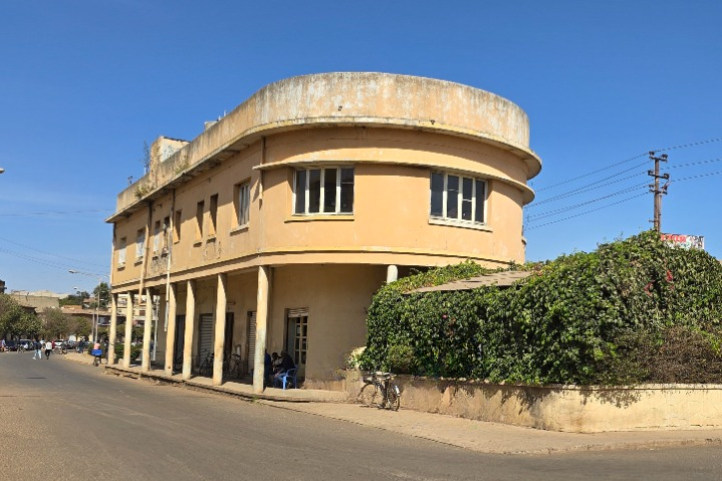
Segeneyti Street Building
Built in the 1930s by Giuseppe Arata, this building features a curved corner façade, horizontal windows, and a flat roof. Its shaded, pillared ground floor and streamlined form reflect the clarity of Italian Modernist/Rationalist design.
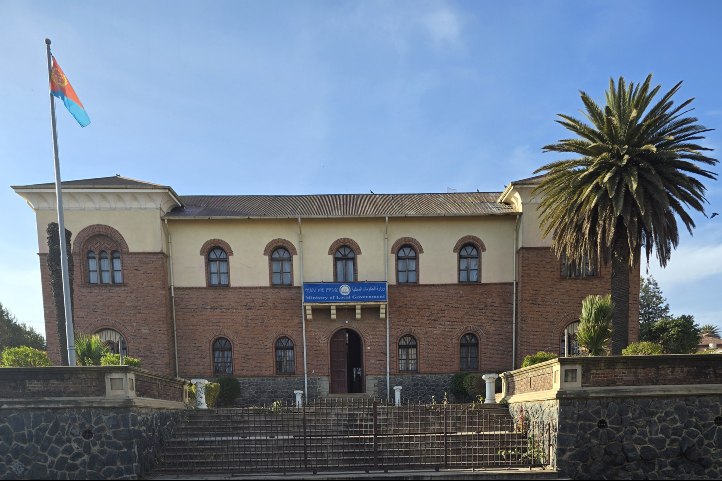
Min. of Local Government, Baka Street
The building is a fine example of Italian colonial architecture, featuring a symmetrical façade, exposed brickwork and arched windows.
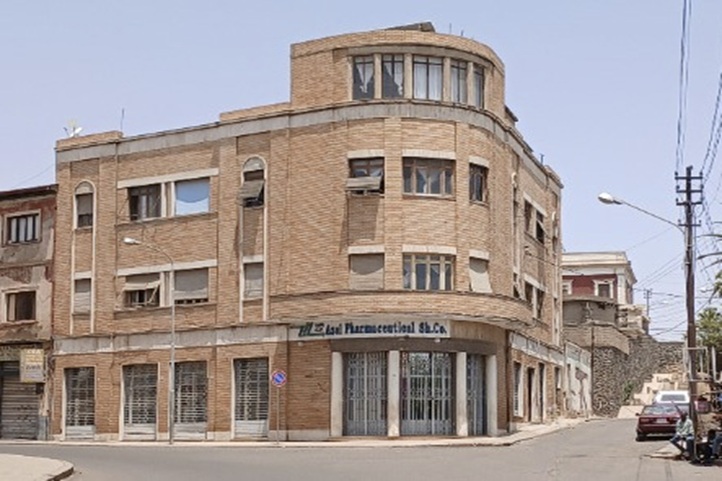
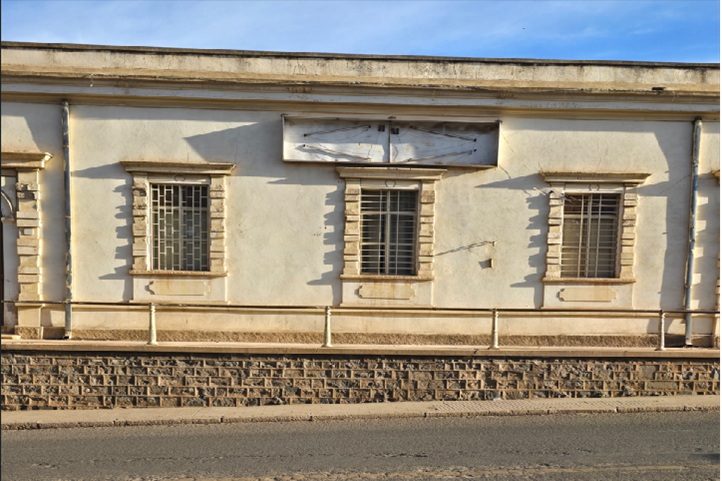
Roadside barrack-like building, Denden Street
The buidling reflects Italian colonial utilitarian architecture with plain plastered façade, simple framed windows, and rusticated stone base.
![Denden St. Building [1]](https://ciaoasmara.com/wp-content/uploads/2026/04/denden_street_building_2.jpg)
![Denden St. Building [3]](https://ciaoasmara.com/wp-content/uploads/2026/04/denden_street_building_3-1.jpg)
Residential building, Denden Street
Modernist style, featuring a symmetrical façade, exposed stone masonry central section, plastered sides, and projecting balconies.
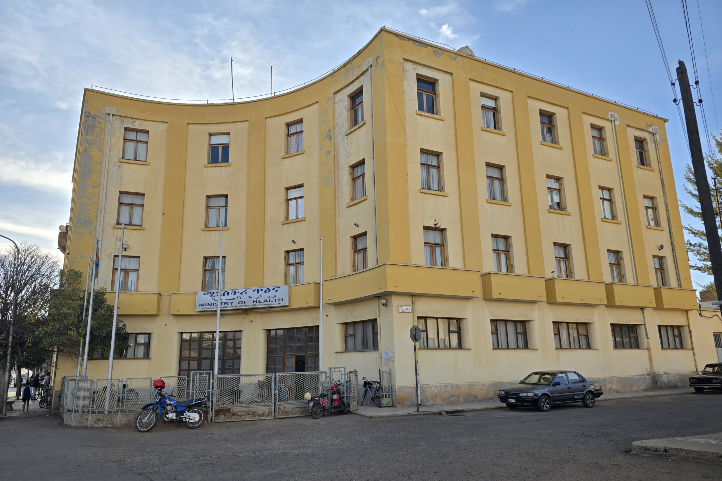
![Selam Street Building [1]](https://ciaoasmara.com/wp-content/uploads/2026/04/selam_street_building_1.jpg)
Palazzo Berta, Selam Street
The building features a rounded corner façade, exposed brickwork, arched windows and recessed balconies, blending Italian colonial architecture with Modernist influences.
![Selam Street Building [1]](https://ciaoasmara.com/wp-content/uploads/2026/04/selam_street_building_2.jpg)
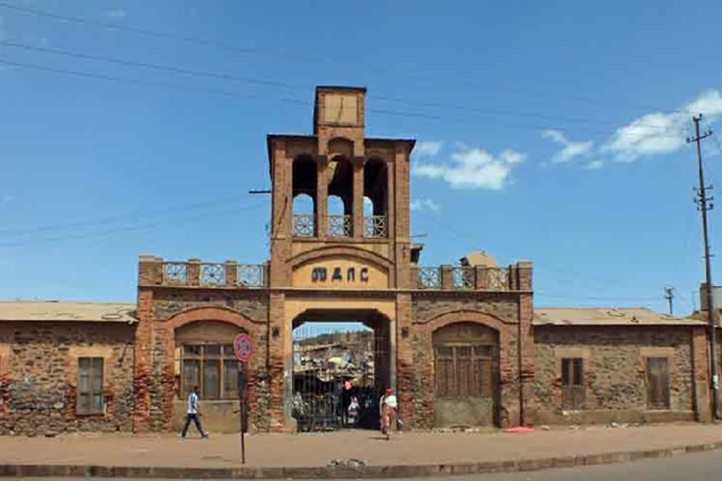
Medeber, Afabet Street
Medeber, an open-air workshop and metal scrapyard behind Saint Mary’s Church, dates back to 1914 and features Italian colonial industrial architecture.
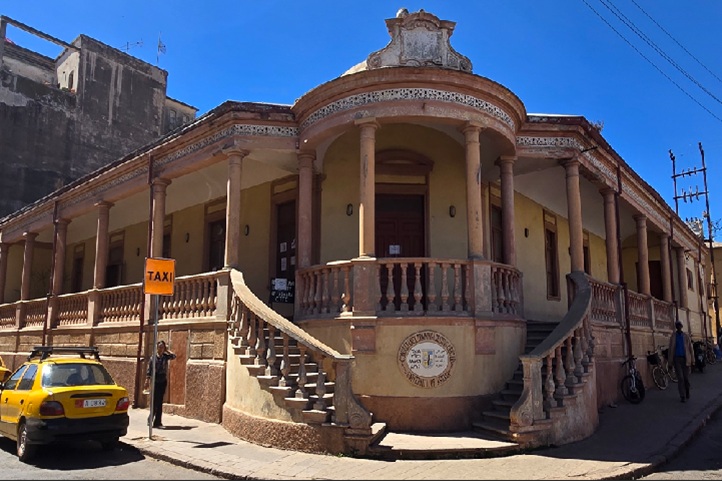
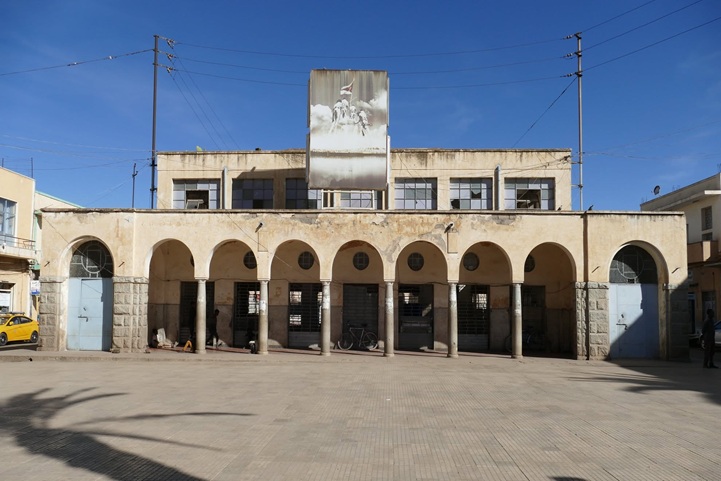
Asmara Fish Market, Harnet Avenue
Il Mercato del Pesce, built between 1936 and 1937, features a striking nine-arch façade, clean geometric lines and a functional design reflecting Italian Rationalist and Art Deco influences.
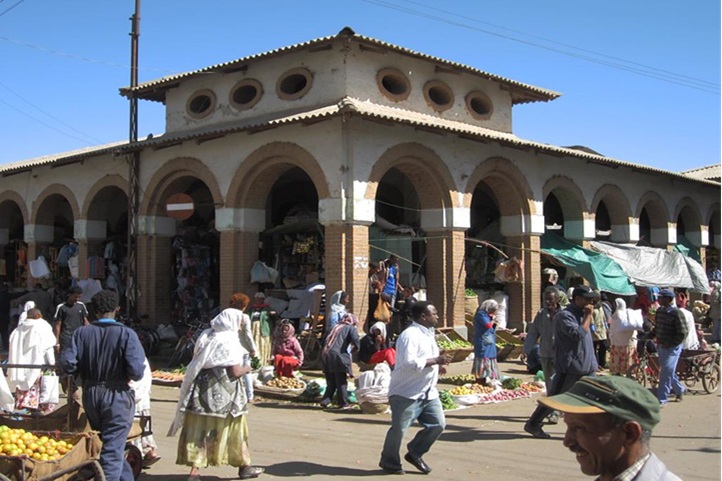
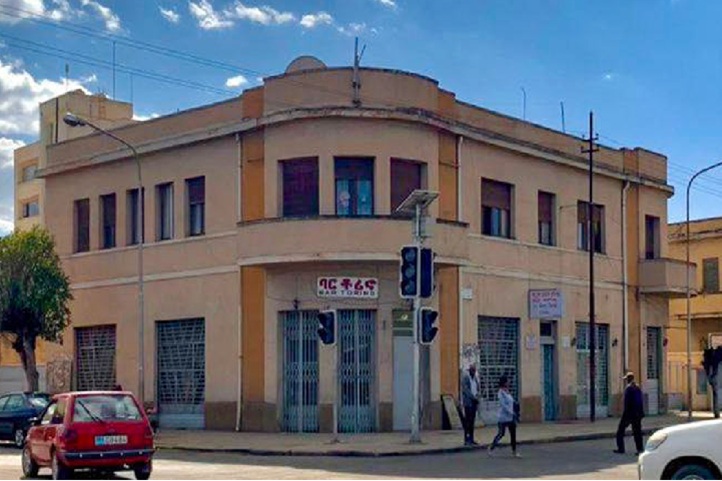
Bar Torino Building, 171-9 Street
Dating from the 1930s, the Bar Torino building reflects restrained Italian Modernism, with a curved corner façade, clean horizontal lines and regularly spaced windows.
Inside Asmara’s Architecture
Use the left and right arrows, or swipe on mobile, to explore the gallery.


The Making of Modern Asmara
The Italian architects of the 1930s unleashed their creative imaginations across Asmara (Wrong, 2005). Together with skilled Eritrean labourers, they transformed Asmara into the remarkable architectural living museum we see today.