Before Italian colonisation in 1890, according to popular Tigrinya folklore, Asméra (ኣስመራ), subsequently referred to as Asmara by the Italians, originated from the union of four neighbouring villages on the Hamasien Plateau (now the Central Region). The villages united to defend themselves against outside raiders who attacked and pillaged them, a historic alliance remembered as Arbate Asmara (ኣርባዕተ ኣስመራ), meaning “the four united”. (History of Asmara)
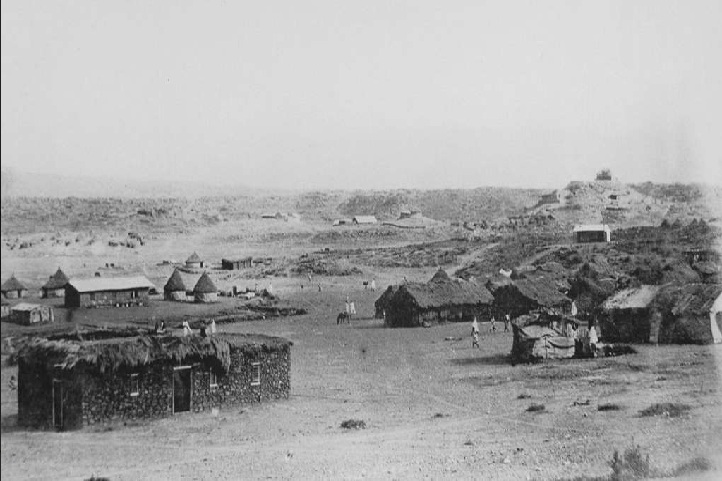
Asmara, 1889 (Source IsIAO).
Asmara, 1889, shortly before the Italian occupation, during the final period of Ras Alula’s influence in the region (Source: IsIAO Archive).
Italy formally proclaimed the Colony of Eritrea on 1 January 1890, with Massawa as its first capital. Following Ferdinando Martini’s appointment as governor in 1897, the colonial administration shifted to Asmara, which officially replaced Massawa as capital by 1900.
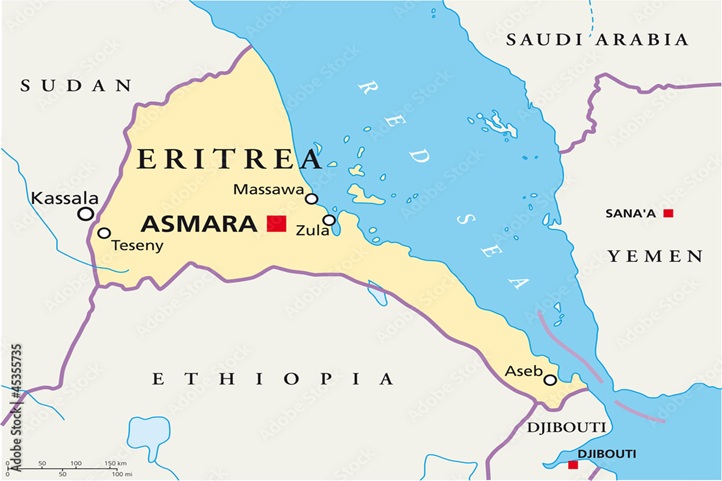
Map of Eritrean (Source: abposters).
In pursuit of Mussolini’s short-lived Second Roman Empire, the Italians transformed Asmara into La Piccola Roma (“Little Rome”), a living museum of Italian architectural experimentation and urban planning made possible by the indispensable labour of Eritreans.
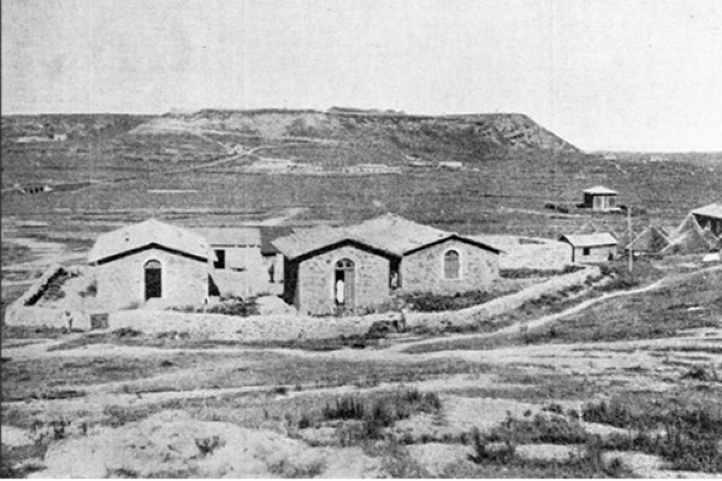
Forte Baldisera, circa 1896 (Photo: Public Archives ).
The Hamasien Plateau overlooking Forte Baldissera. The fort, named after Italian General Antonio Baldissera, who governed Eritrea from 22 February 1896 to 16 December 1897, was a military post strategically built on the hilltop site of the historic village of Beit Meka’e, forcing the local inhabitants to resettle nearby.
Browse the Gallery
Use the left and right arrows, or swipe on mobile, to explore the gallery.